
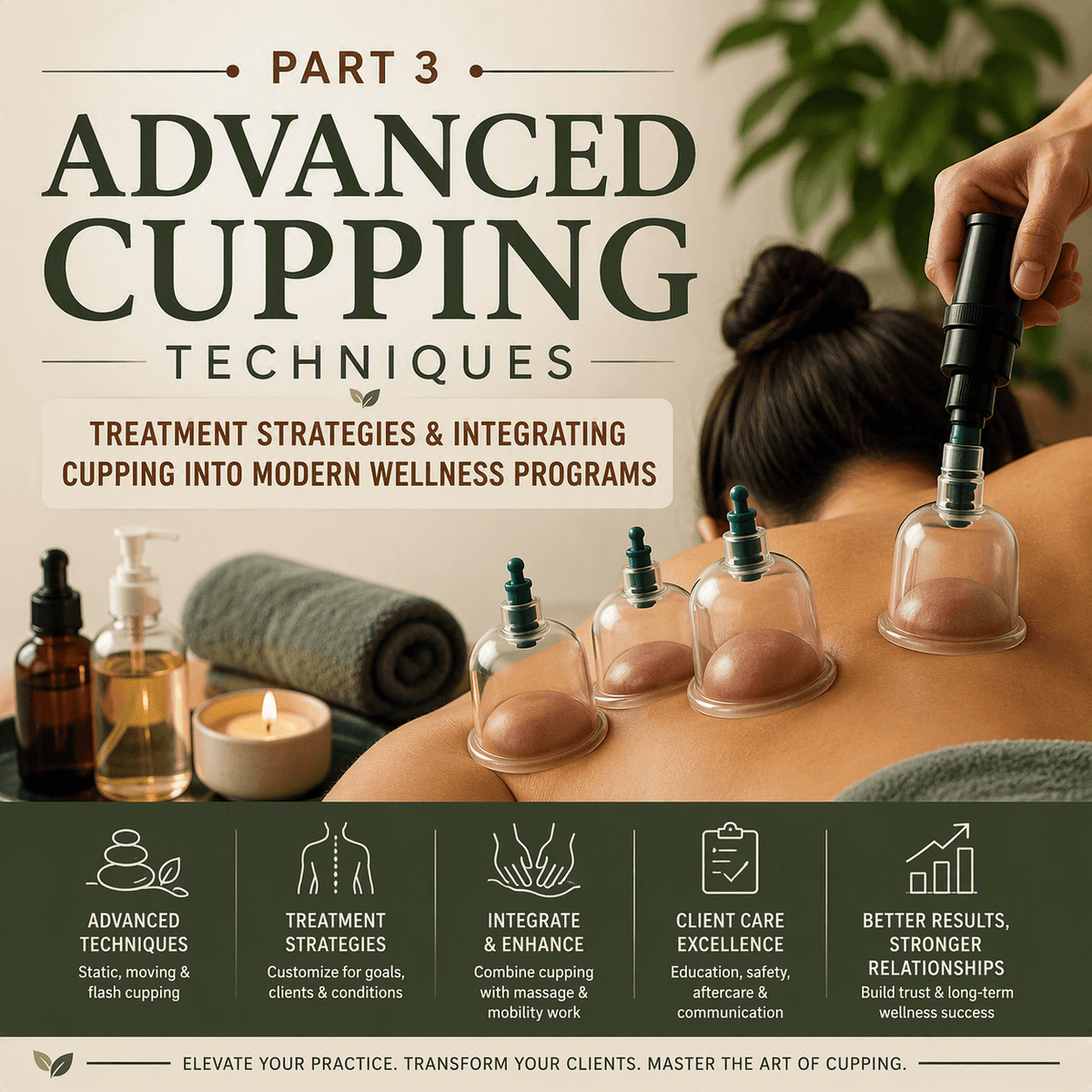
The cups themselves are only part of the story. What often separates an average cupping session from an exceptional one is how the technique is applied, how treatment decisions are made, and how cupping is integrated into a larger wellness, recovery, or bodywork strategy.
In this third installment of our cupping therapy series, we'll explore advanced cupping methods, treatment planning, client communication, and practical ways to incorporate cupping into massage, sports recovery, and modern wellness programs.
What You'll Learn in Part 3
This guide covers:
- Static vs. moving cupping
- Flash cupping and dynamic techniques
- Cupping for athletes and active lifestyles
- Combining cupping with massage therapy
- Integrating cupping into wellness programs
- Treatment planning and customization
- Client education and communication
- Common practitioner mistakes
- Advanced cupping myths and misconceptions
- Building long-term client relationships
- Frequently asked questions

Why Technique Matters More Than Equipment
Many people spend considerable time choosing cups and supplies but overlook the factor that often makes the biggest difference: technique.
Two practitioners can use identical equipment and create completely different client experiences based on:
- Cup placement
- Suction intensity
- Treatment duration
- Movement patterns
- Treatment goals
- Assessment skills
- Communication style
The best practitioners don't simply apply cups and follow a standard routine.
Instead, they adjust treatment based on the person in front of them.
The Difference Between Tools and Technique
Quality equipment is important, but equipment alone doesn't create effective treatment.
Technique influences:
- Client comfort
- Skin response
- Treatment goals
- Session flow
- Overall experience
Modern cupping is most effective when practitioners understand how to modify treatment instead of applying the same approach to every client.
Why Personalization Matters
No two clients are exactly alike.
Factors that influence treatment include:
- Activity level
- Age
- Health history
- Goals
- Skin sensitivity
- Previous cupping experience
Personalized treatment usually delivers better outcomes than a one-size-fits-all approach.
Static vs. Moving Cupping: Understanding the Two Most Common Techniques
Most people are familiar with static cupping because it produces the classic circular marks often seen on athletes. However, moving cupping has become equally popular in massage therapy, sports recovery, and wellness settings.
What Is Static Cupping?
Static cupping involves placing cups on specific areas and leaving them in place for a designated period.
The cups remain stationary while negative pressure is maintained.
Common treatment areas include:
- Upper back
- Lower back
- Shoulders
- Hamstrings
- Calves
Benefits of Static Cupping
Many practitioners choose static cupping because it:
- Is simple to perform
- Allows consistent pressure
- Targets specific areas
- Makes skin response easier to monitor
- Can be integrated into many treatment styles
When Static Cupping Is Often Used
Static cupping is commonly selected when addressing:
- Localized muscle tension
- Recovery sessions
- Restricted movement areas
- Specific regions of perceived tightness
What Is Moving Cupping?
Moving cupping combines suction with movement.
A lubricant is applied to the skin, and the cups glide across the treatment area while maintaining controlled suction.
The experience often feels very different from static cupping.
Benefits of Moving Cupping
Moving cupping may:
- Cover larger treatment areas
- Create dynamic tissue movement
- Provide a massage-like sensation
- Reduce feelings of tissue restriction
- Create a unique sensory experience
Common Areas for Moving Cupping
Practitioners frequently use moving cupping on:
- Back muscles
- Shoulders
- Hip regions
- Thighs
- Calves
Static vs. Moving Cupping Comparison
| Feature | Static Cupping | Moving Cupping |
|---|---|---|
| Cup Position | Stationary | Gliding |
| Treatment Area | Localized | Broad |
| Lubricant Needed | Usually No | Usually Yes |
| Common Goal | Targeted work | Larger-area treatment |
| User Experience | Focused pressure | Continuous movement |

Flash Cupping and Dynamic Applications
Not every cupping session involves leaving cups in place.
Some practitioners use a technique called flash cupping to create a different treatment experience.
What Is Flash Cupping?
Flash cupping involves applying a cup and removing it almost immediately before repeating the process multiple times across a treatment area.
Rather than sustained suction, the body experiences brief repeated stimulation.
Why Some Practitioners Use Flash Cupping
Reasons may include:
- Introducing new clients to cupping
- Reducing treatment intensity
- Minimizing prolonged suction
- Creating varied sensory input
Potential Benefits
Flash cupping may:
- Feel gentler for some individuals
- Produce fewer visible marks
- Work well for sensitive clients
- Provide a dynamic treatment experience
When Flash Cupping May Be Appropriate
Practitioners may consider flash cupping for:
- First-time clients
- Sensitive treatment areas
- Clients concerned about marks
- More gradual introductions to cupping
How Practitioners Choose the Right Technique
Effective treatment begins before the first cup touches the skin.
The decision-making process often determines the quality of the session.
Treatment Goals
Every session should begin with a clear objective.
Common goals include:
- Recovery support
- Mobility work
- Relaxation
- Wellness maintenance
- Comfort improvement
Client Experience Level
Someone receiving cupping for the first time may benefit from a different approach than an experienced client.
Practitioners often adjust:
- Pressure
- Duration
- Number of cups
- Technique selection
Skin Sensitivity and Tissue Response
Some individuals respond strongly to even moderate suction.
Others tolerate significantly more pressure.
Treatment should adapt to individual response rather than arbitrary standards.
Body Area Being Treated
Different body regions require different approaches.
For example:
- Lower back applications may differ from shoulder treatments.
- Curved surfaces require different cup placement strategies than flatter treatment areas.
Lifestyle and Activity Level
Athletes, office workers, and wellness-focused clients often have very different goals.
Those goals should influence treatment planning.
Cupping for Athletes and Active Individuals
Athletes helped make cupping mainstream, but sports recovery is only one of many applications.
Many active individuals incorporate cupping into broader recovery programs.
Why Athletes Turn to Cupping
Athletes often seek:
- Recovery support
- Reduced perceptions of soreness
- Mobility maintenance
- Soft tissue work
- Wellness routines
Common Recovery Goals
Many athletes use cupping as part of:
- Training cycles
- Competition preparation
- Scheduled recovery days
- Periods of heavier workloads
When Athletes Often Schedule Treatment
Timing varies considerably.
Some athletes schedule sessions:
- After intense training
- During recovery periods
- Between competitions
- During off-season programs
Recovery Should Be Individual
The most effective recovery plan is typically the one that fits the athlete's schedule, training demands, and personal response.
Combining Cupping With Massage Therapy
Cupping and massage are often viewed as separate treatments, but many practitioners successfully combine both.
In fact, integrated sessions have become increasingly popular.
How Massage and Cupping Differ
Massage primarily relies on:
- Compression
- Kneading
- Friction
- Hands-on manipulation
Cupping primarily relies on:
- Negative pressure
- Tissue lifting
- Decompression
Why They Work Well Together
These techniques create very different tissue experiences.
Many practitioners use them together because they:
- Complement one another
- Create varied sensations
- Allow treatment flexibility
- Help personalize sessions
Benefits of Integrated Treatments
Combining massage and cupping may help:
- Improve session variety
- Address multiple treatment goals
- Increase client engagement
- Create customized experiences
Example Treatment Flow
A typical integrated session might include:
- Consultation
- Assessment
- Massage therapy
- Targeted cupping
- Reassessment
- Aftercare recommendations

How Cupping Fits Into Modern Wellness Programs
Modern wellness consumers are increasingly seeking comprehensive approaches instead of isolated services.
Cupping can be incorporated into broader wellness offerings.
Cupping and Mobility Programs
Some practitioners combine cupping with:
- Stretching
- Corrective exercise
- Movement training
- Flexibility work
Cupping and Recovery Services
Recovery-focused programs may include:
- Massage
- Cupping
- Mobility sessions
- Recovery education
Cupping in Spa Environments
Popular spa integrations include:
- Recovery packages
- Signature treatments
- Wellness experiences
- Massage enhancements
Cupping as Part of Self-Care
Some individuals include occasional cupping sessions within a larger wellness routine focused on:
- Stress management
- Recovery
- Lifestyle balance
- Physical well-being
Building Effective Treatment Plans
The best treatment plans begin with clear goals.
Start With the Client's Objective
Ask:
- Why are they seeking treatment?
- What would success look like?
- What concerns do they have?
Consider Lifestyle and Timing
Treatment frequency and scheduling should account for:
- Work demands
- Activity levels
- Recovery needs
- Personal preferences
Evaluate Previous Experiences
Past experiences often reveal valuable information regarding:
- Comfort levels
- Treatment preferences
- Expected outcomes
Set Realistic Expectations
One of the most important responsibilities of a practitioner is helping clients understand what cupping can and cannot realistically accomplish.
Client Education: Building Trust Through Better Communication
The strongest client relationships are built on education.
Well-informed clients often have more realistic expectations and greater confidence in treatment.
Common Questions Clients Ask
Clients frequently ask:
- How long will marks last?
- How often should I receive treatment?
- Will it hurt?
- Is it safe?
Clear, honest answers help establish trust.
Explaining Cupping Marks
Many clients assume darker marks indicate better treatment.
Education should focus on:
- Individual variability
- Suction levels
- Treatment duration
- Skin characteristics
Explaining Results
Rather than focusing on marks, encourage clients to evaluate:
- Comfort
- Function
- Mobility
- Recovery
- Daily activities
Teaching Proper Aftercare
Good aftercare discussions improve:
- Client expectations
- Skin care
- Overall treatment experience
Common Practitioner Mistakes and How to Avoid Them
Even experienced professionals can occasionally fall into predictable habits.
Treating Every Client the Same
Individualized treatment is generally preferable to standardized protocols.
Using Too Much Suction
More intensity does not automatically create better outcomes.
Chasing Dark Marks
Visible marks should not be the goal of treatment.
Poor Communication
Clients should understand:
- What is being done
- Why it is being done
- What to expect afterward
Ignoring Client Feedback
Feedback provides valuable information and should influence future sessions.

Specialty Applications for Different Client Types
Different populations often seek cupping for different reasons.
Office Workers
Common concerns include:
- Shoulder tension
- Neck stiffness
- Postural fatigue
Athletes
Common goals include:
- Recovery
- Mobility
- Soft tissue maintenance
Wellness Clients
These individuals often prioritize:
- Relaxation
- Wellness support
- Stress management
Spa Guests
Cupping may be incorporated into:
- Signature experiences
- Luxury treatments
- Recovery-focused packages
The Client Journey: From First Session to Long-Term Success
The most successful practices view treatment as an ongoing process rather than a single encounter.
Initial Consultation
Understanding goals is the first step.
Assessment and Planning
Thoughtful assessment helps guide treatment decisions.
First Session
The initial session establishes expectations and collects valuable feedback.
Progress Monitoring
Practitioners should periodically evaluate:
- Comfort
- Function
- Mobility
- Client satisfaction
Long-Term Wellness Strategy
Some clients choose to integrate cupping into broader wellness routines over time.
Advanced Cupping Myths vs. Reality
Even experienced clients encounter misinformation.
Myth: More Cups Produce Better Results
Quality of treatment matters far more than quantity.
Myth: Cupping Should Hurt
Effective cupping should not require excessive discomfort.
Myth: Dark Marks Equal Success
Mark intensity is not a reliable measure of treatment effectiveness.
Myth: Every Athlete Uses Cupping
Many athletes use cupping, but many successful athletes do not.
Myth: Cupping Is a Cure-All
Cupping is best viewed as one tool within a larger wellness strategy.
[CUSTOM GRAPHIC #4]
Advanced Cupping Techniques at a Glance
Compare:
- Static Cupping
- Moving Cupping
- Flash Cupping
- Massage-Integrated Cupping
Include:
- Typical intensity
- Treatment goals
- Client experience
- Ideal applications
Frequently Asked Questions (FAQs) About Advanced Cupping Techniques
Which cupping technique is best?
There is no universally best technique. The ideal approach depends on goals, treatment area, client preferences, and practitioner judgment.
Is moving cupping better than static cupping?
Neither is inherently superior. Each technique serves different purposes and can be effective when matched appropriately to treatment goals.
Should every massage include cupping?
No. Cupping should only be included when it supports the objectives of the session.
How do practitioners decide where to place cups?
Placement decisions are typically based on anatomy, treatment goals, client comfort, and professional training.
How can you tell if a session was successful?
Progress should be measured by meaningful outcomes such as comfort, movement quality, recovery, and function rather than mark appearance alone.
Is stronger suction always better?
No. Appropriate suction generally provides the best balance between effectiveness and comfort.
Why do some people get darker marks than others?
Factors may include treatment duration, pressure, location, circulation, skin characteristics, and individual response.
Can cupping be combined with other wellness services?
Yes. Many practitioners successfully integrate cupping with massage, recovery programs, mobility work, and wellness services.
The Bottom Line About Advanced Cupping Techniques
Advanced cupping is about much more than placing cups on the skin. The most effective practitioners focus on assessment, communication, technique selection, client education, and thoughtful treatment planning. Whether cupping is used as a standalone service or integrated into massage, recovery, or wellness programs, long-term success comes from using the right technique for the right person at the right time.
See Our Equipment For Cupping Therapy
Medical Disclaimer
The information provided in this article is intended for general educational and informational purposes only and should not be considered medical advice, diagnosis, or treatment. Cupping therapy is a complementary wellness practice and is not intended to diagnose, treat, cure, or prevent any disease, injury, or medical condition.
While some individuals use cupping therapy as part of a broader wellness, recovery, or self-care routine, results can vary significantly from person to person. The effectiveness, appropriateness, and safety of cupping depend on multiple factors, including individual health status, medical history, medications, treatment goals, practitioner training, and the specific technique being used.
Cupping may not be appropriate for everyone. Individuals who are pregnant, taking blood-thinning medications, have bleeding or clotting disorders, skin conditions, vascular disorders, recent injuries, recent surgeries, or other health concerns should consult a qualified healthcare professional before receiving cupping therapy. Any unexplained, severe, worsening, or persistent symptoms should be evaluated by an appropriate medical professional rather than self-treated with cupping or any other complementary therapy.
When receiving professional cupping services, always seek care from a qualified practitioner who operates within their applicable scope of practice and follows appropriate sanitation, hygiene, and safety procedures. If using cupping equipment at home, carefully follow all manufacturer instructions and use only techniques appropriate to your level of training and experience.
The authors, publisher, and website assume no responsibility for any injury, loss, risk, or damages that may occur directly or indirectly from the use or misuse of the information presented in this article. Readers are responsible for making informed decisions regarding their own health and wellness and should seek professional medical guidance when necessary.
If you are experiencing a medical emergency, contact emergency services or seek immediate medical attention.