
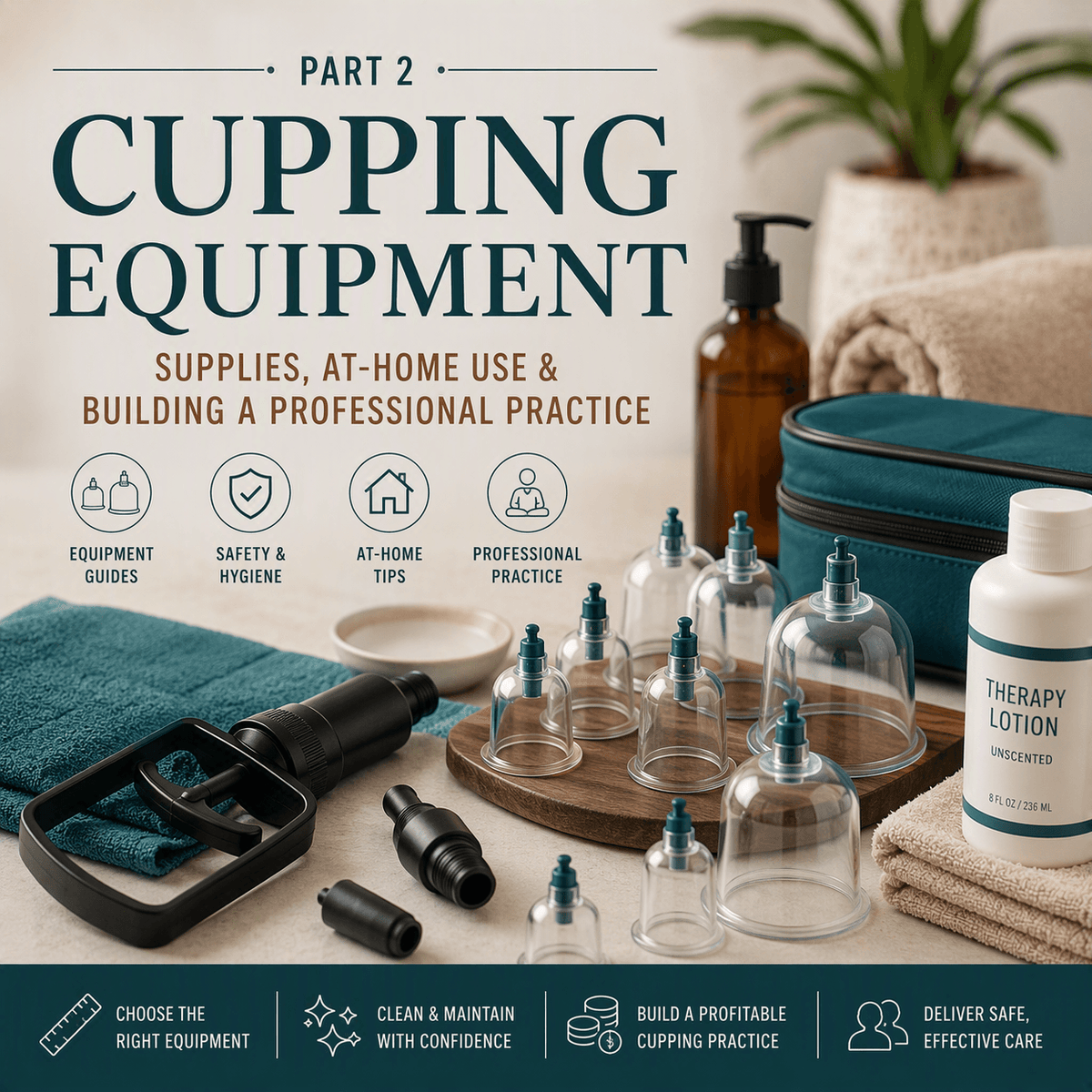
Understanding how cupping therapy works is only half the equation. The quality of the equipment, the way it's maintained, the techniques being used, and the environment in which treatment takes place can dramatically influence both the experience and the outcome.
Whether you're a massage therapist expanding your services, a wellness professional evaluating new treatment options, or a consumer considering an at-home cupping kit, this guide will help you make smarter decisions about cupping equipment, safety, setup, and long-term success.
What You'll Learn in This Guide About Cupping Therapy & Equipment
In this second installment of our cupping therapy series, we'll cover:
- Essential cupping supplies and equipment
- How to choose the right cupping set
- Silicone vs. plastic vs. glass vs. bamboo cups
- Professional vs. consumer-grade equipment
- Choosing the right cup sizes
- At-home cupping safety considerations
- Equipment maintenance and sanitation
- What separates quality equipment from cheap alternatives
- Building a professional cupping service
- Equipment costs and investment considerations
- Cupping certifications and training
- Common mistakes beginners make
- What to look for when buying cupping supplies
- Frequently asked questions from consumers and professionals

What Equipment Do You Actually Need for Cupping?
One of the biggest surprises for beginners is that cupping doesn't require dozens of products to get started.
At its core, cupping therapy requires just two things:
- A cup
- A method of creating suction
However, once you move into professional practice, the equipment list becomes much more comprehensive.
A Basic At-Home Cupping Setup
Most home users can begin with:
- A beginner-friendly cupping set
- A suction mechanism (if applicable)
- Massage oil or lubricant
- Cleaning supplies
- Storage case
Many modern starter kits already include these essentials.
A Professional Cupping Setup
Therapists and wellness professionals typically require:
| Equipment | Purpose |
|---|---|
| Multiple cup sizes | Different body areas |
| Suction pump system | Controlled pressure application |
| Treatment lubricant | Moving cupping techniques |
| Towels and draping | Client comfort |
| Cleaning products | Equipment hygiene |
| High-level disinfectants | Reusable equipment processing |
| Storage systems | Organization and protection |
| Documentation forms | Client tracking |
| Gloves | Additional protection when needed |
| Replacement cups and parts | Operational reliability |
The goal isn't to own the most equipment.
The goal is to own the right equipment for the kinds of clients and treatments you provide.
How Do You Choose the Best Cupping Set?
Most people begin their search by asking:
"What's the best cupping set?"
A better question is:
"What's the best cupping set for my goals?"
The ideal setup for a massage therapist differs significantly from what an athlete, spa owner, or home user may need.
When evaluating a cupping kit, consider:
Ease of Use
Can you quickly create and control suction?
Comfort
Does the cup sit comfortably against the skin?
Versatility
Does the set include multiple cup sizes?
Durability
Will the materials withstand repeated use?
Cleaning Requirements
Can the cups be cleaned effectively and efficiently?
Replacement Availability
Can individual pieces be replaced without buying a completely new kit?
These practical considerations often matter far more than marketing claims.
Silicone vs. Glass vs. Plastic vs. Bamboo: Which Cupping Material Is Best?
No single cup material is universally superior.
Each material offers unique strengths and weaknesses.
The best option depends on your training, goals, experience level, and preferred techniques.
Silicone Cupping Cups
Silicone has become one of the most popular materials in modern wellness environments.
Advantages
- Flexible
- Lightweight
- Portable
- Beginner friendly
- Excellent for moving cupping
- No pump required
- No fire required
Potential Drawbacks
- Less rigid suction control
- Can wear over time
- May not provide the same level of negative pressure as some vacuum systems
Best For
- Home users
- Massage therapists
- Mobile practitioners
- Sports recovery applications
Glass Cupping Cups
Glass cups are often associated with traditional cupping methods.
Advantages
- Highly durable
- Easy visual monitoring
- Traditional aesthetic
- Smooth surfaces
- Strong suction capability
Potential Drawbacks
- Breakable
- Heavier
- Less travel friendly
- Fire cupping introduces additional safety concerns
Best For
- Traditional techniques
- Experienced practitioners
- Stationary treatment environments
Plastic Vacuum Cupping Systems
Plastic systems paired with hand pumps dominate much of today's professional market.
Advantages
- Controlled suction
- Consistent application
- Multiple cup sizes
- User friendly
- Excellent pressure management
Potential Drawbacks
- More parts
- Additional maintenance
- Mechanical components can wear out
Best For
- Clinics
- Massage practices
- Wellness centers
- New practitioners
Bamboo Cupping Cups
Bamboo cups represent one of the oldest traditional cup materials.
Advantages
- Traditional appeal
- Lightweight
- Unique presentation
Potential Drawbacks
- More maintenance
- Variable durability
- Additional sanitation considerations
Best For
- Traditional-focused practitioners
- Specialty wellness settings

How Do You Choose the Right Cup Size?
The size of the cup matters almost as much as the material. Different body regions require different approaches.
Small Cups
Ideal for:
- Arms
- Hands
- Feet
- Jawline
- Smaller muscle groups
Medium Cups
Often considered the workhorses of a cupping set.
Useful for:
- Shoulders
- Upper back
- Calves
- Hips
Large Cups
Designed for:
- Lower back
- Glutes
- Hamstrings
- Large muscle groups
Why Cup Shape Matters
The body isn't flat.
A cup that performs perfectly on the lower back may struggle to maintain a seal on:
- Ankles
- Shoulders
- Elbows
- Neck regions
A versatile kit should include a range of cup sizes and shapes.
What Separates High-Quality Cupping Equipment From Cheap Alternatives?
Price alone doesn't determine quality.
Some affordable systems perform exceptionally well, while some expensive kits prioritize appearance over functionality.
Signs of Quality Equipment
Look for:
- Consistent cup thickness
- Smooth edges
- Reliable seals
- Durable materials
- Quality suction control
- Easy cleaning surfaces
- Clear manufacturer instructions
- Replacement-part availability
Red Flags
Avoid equipment that:
- Has rough edges
- Cracks easily
- Creates inconsistent suction
- Lacks care instructions
- Uses poor-quality materials
- Has fragile pump components
Professional-looking equipment should still be evaluated on practical performance.
Building a Professional Cupping Service
Adding cupping to an existing wellness or massage practice can be a relatively accessible service expansion.
Success comes from much more than simply purchasing cups.
Core Components of a Professional Service
Practitioner Training
Equipment ownership does not equal competency.
Training should include:
- Contraindications
- Pressure management
- Client assessment
- Safety protocols
- Documentation
Treatment Protocols
Develop clear systems for:
- Client screening
- Session planning
- Aftercare
- Recordkeeping
Equipment Standards
Use equipment that is:
- Reliable
- Maintainable
- Appropriate for your environment
Client Education
Many clients arrive with misconceptions.
Explaining:
- What cupping is
- What it isn't
- What results are realistic
can significantly improve satisfaction.
What's the Real Cost of Adding Cupping to a Practice?
The true investment extends beyond the cups themselves.
Factor in:
- Equipment
- Training
- Continuing education
- Replacement parts
- Sanitation supplies
- Documentation systems
- Marketing
- Insurance considerations
Many practitioners find the relatively modest startup costs appealing compared to other specialty wellness services.
However, training and quality control should never become secondary to cost savings.

Can You Perform Cupping Safely at Home?
At-home cupping has become increasingly common, but simplicity should not be confused with risk-free use.
For healthy individuals, basic dry cupping may be appropriate when approached conservatively.
Safer DIY Practices
- Start with low suction
- Follow manufacturer guidelines
- Use healthy, intact skin
- Monitor tissue response
- Stop if discomfort becomes excessive
Areas New Users Should Avoid
- Broken skin
- Irritated skin
- Infected areas
- Areas with impaired sensation
- Areas they cannot safely monitor
What Home Users Should Never Attempt
- Extremely aggressive suction
- Fire cupping without proper training
- Wet cupping
- Treating unexplained medical conditions
- Ignoring adverse reactions
Professional guidance remains the safest starting point for beginners.
Professional Cupping vs. At-Home Cupping
Both approaches have advantages.
Understanding the differences helps set realistic expectations.
| Professional Treatment | At-Home Treatment |
|---|---|
| Professional assessment | Self-assessment |
| Customized treatment | General protocols |
| Multiple techniques | Usually simplified use |
| Hard-to-reach areas treated | Limited reach |
| Ongoing monitoring | Self-monitoring |
| Integrated with other therapies | Usually standalone |
For complex concerns, professional care generally offers significant advantages.
Cupping Equipment Maintenance: Protect Your Investment
Well-maintained cups can remain serviceable for years.
Poorly maintained equipment often becomes unreliable quickly.
Daily Maintenance
After every use:
- Inspect equipment
- Remove visible residue
- Clean thoroughly
- Dry completely
- Store appropriately
Weekly Maintenance
Check:
- Seals
- Hoses
- Pumps
- Connectors
- Storage systems
Periodic Equipment Review
Replace:
- Cracked cups
- Damaged seals
- Worn components
- Malfunctioning pumps
Small maintenance tasks prevent larger equipment failures later.
Why Cupping Equipment Hygiene Matters More Than Most People Realize
The easiest equipment mistake is treating sanitation as an afterthought.
The smartest practitioners do the opposite.
Proper hygiene:
- Protects clients
- Protects practitioners
- Extends equipment life
- Supports professionalism
- Promotes confidence
Good sanitation practices should be viewed as essential components of treatment quality.
Common Cupping Equipment Mistakes Beginners Make
Learning what not to do can save significant time and money.
Mistake #1: Buying the Biggest Kit Available
More cups don't automatically equal better results.
Start with versatile essentials.
Mistake #2: Focusing Only on Price
The cheapest option often becomes the most expensive replacement purchase.
Mistake #3: Ignoring Cleaning Requirements
Easy maintenance should be considered before purchase.
Mistake #4: Using Too Much Suction
More intensity doesn't necessarily improve outcomes.
Mistake #5: Choosing One Cup Size
Versatility matters.
Mistake #6: Skipping Training
Even simple techniques benefit from proper education.
Cupping Certification: What Professionals Should Know
Many practitioners ask whether a cupping certification is required.
The answer depends on:
- Location
- Profession
- Regulatory environment
- Scope of practice
A training certificate and a professional license are not the same thing.
Before offering services, practitioners should verify local requirements regarding:
- Licensing
- Facility regulations
- Scope of practice
- Documentation requirements
- Sanitation standards
Always verify requirements directly with applicable regulatory authorities.
How to Tell Whether Cupping Is Actually Working
The most meaningful measurement isn't what the skin looks like.
It's whether the original goal is improving.
Track:
- Pain levels
- Mobility
- Activity tolerance
- Recovery
- Sleep quality
- Comfort
The best outcome measures are practical and measurable.
Coming Up in Part 3: Advanced Cupping Techniques, Treatment Strategies & Integrating Cupping Into Modern Wellness Programs
In the next guide, we'll move beyond equipment and explore:
- Static vs. moving cupping
- Flash cupping
- Sports recovery protocols
- Integrating cupping into massage sessions
- Combining cupping with mobility work
- Client communication strategies
- Treatment planning
- Advanced practitioner tips
- Specialty wellness applications
Frequently Asked Questions (FAQs) About Cupping Equipment & Practice
What's the best cupping set for beginners?
Most beginners benefit from a straightforward silicone or vacuum-style starter kit that includes multiple cup sizes and clear instructions.
Is expensive cupping equipment worth it?
Not always. Performance, durability, sanitation, and usability matter more than price alone.
How many cups do I need?
Most users benefit more from variety than quantity. Multiple sizes are often more valuable than large numbers of identical cups.
Can I share cupping equipment?
Shared reusable equipment should only be used after appropriate cleaning and processing according to manufacturer guidance and hygiene requirements.
Which type of cup lasts the longest?
Glass and high-quality plastic systems often offer excellent longevity when properly maintained.
Can cupping cups wear out?
Yes. Seals, valves, pumps, and cup materials can deteriorate with repeated use.
Is professional equipment better than consumer equipment?
Professional systems often offer improved durability, consistency, and flexibility, but they do not replace training or good technique.
Can I add cupping to my massage practice?
Many massage therapists successfully incorporate cupping into existing services, provided it falls within applicable laws, regulations, and professional standards.
Is fire cupping necessary?
No. Many practitioners rely entirely on silicone or vacuum systems and never use fire cupping.
How often should I replace cups?
Replacement depends on wear, damage, performance, and manufacturer recommendations.
The Bottom Line About Cupping Therapy & The Supplies / Equipment You Need
Cupping equipment is about far more than cups.
The most successful outcomes depend on selecting appropriate tools, maintaining them properly, understanding their limitations, using sound techniques, and prioritizing safety above all else.
Whether you're purchasing your first cupping set, adding cupping to a professional practice, or upgrading existing equipment, thoughtful decisions will almost always outperform impulse purchases. The right equipment, combined with proper education, realistic expectations, and consistent maintenance, creates the foundation for a safer, more effective, and more professional cupping experience.
See Our Equipment For Cupping Therapy
Medical Disclaimer
The information provided in this article is intended for general educational and informational purposes only and should not be considered medical advice, diagnosis, or treatment. Cupping therapy is a complementary wellness practice and is not intended to diagnose, treat, cure, or prevent any disease, injury, or medical condition.
While some individuals use cupping therapy as part of a broader wellness, recovery, or self-care routine, results can vary significantly from person to person. The effectiveness, appropriateness, and safety of cupping depend on multiple factors, including individual health status, medical history, medications, treatment goals, practitioner training, and the specific technique being used.
Cupping may not be appropriate for everyone. Individuals who are pregnant, taking blood-thinning medications, have bleeding or clotting disorders, skin conditions, vascular disorders, recent injuries, recent surgeries, or other health concerns should consult a qualified healthcare professional before receiving cupping therapy. Any unexplained, severe, worsening, or persistent symptoms should be evaluated by an appropriate medical professional rather than self-treated with cupping or any other complementary therapy.
When receiving professional cupping services, always seek care from a qualified practitioner who operates within their applicable scope of practice and follows appropriate sanitation, hygiene, and safety procedures. If using cupping equipment at home, carefully follow all manufacturer instructions and use only techniques appropriate to your level of training and experience.
The authors, publisher, and website assume no responsibility for any injury, loss, risk, or damages that may occur directly or indirectly from the use or misuse of the information presented in this article. Readers are responsible for making informed decisions regarding their own health and wellness and should seek professional medical guidance when necessary.
If you are experiencing a medical emergency, contact emergency services or seek immediate medical attention.