
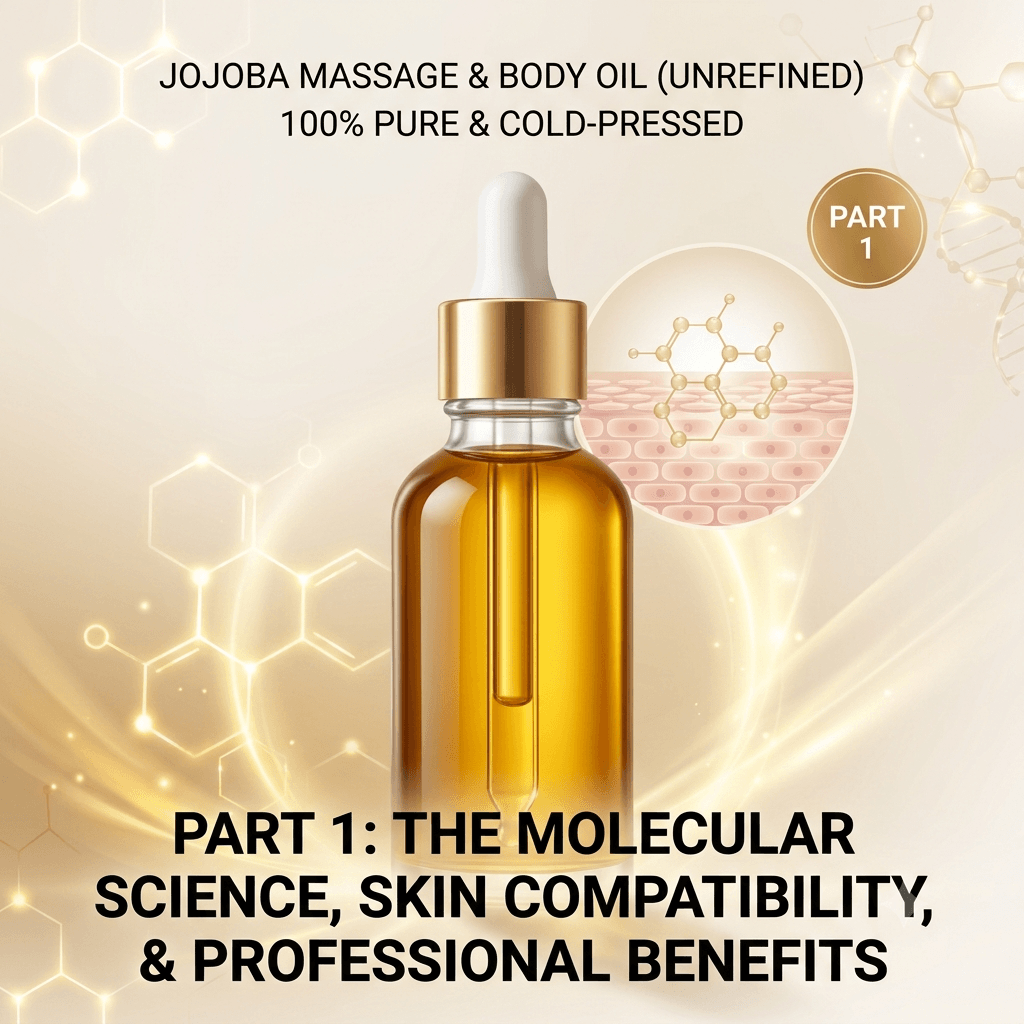
What Exactly Is Jojoba Oil and Why Is It Uniquely a Liquid Wax?
We get this question asked all the time by our customers and are happy to answer /help people understand that: pure unrefined jojoba oil is actually a liquid wax ester extracted from the seeds of the Simmondsia chinensis shrub. Unlike typical vegetable oils made of triglycerides, its molecular structure closely mirrors human sebum, making it highly stable, non-greasy, and uniquely compatible with all human skin types.
At-a-Glance Reference
-
Chemical Classification: Liquid wax ester (not a true fat or triglyceride vegetable oil).
-
Human Sebum Match: Shares an approximate 25% structural similarity to the natural oils produced by human skin.
-
Scent Profile: Completely odorless to incredibly faint, soft nutty undertones when unrefined; leaves no lingering scent.
-
Oxidative Stability: Highly resistant to heat and rancidity, yielding a remarkably long shelf life without preservatives.
-
Pore Impact: Zero-rated on the comedogenic scale, meaning it inherently cannot clog pores or trap sweat.

To understand why this fluid matters for your body care routine, we have to look directly at basic skin biology. Most plant-based products you apply to your skin—such as sweet almond oil, sunflower oil, or grapeseed oil—are chemically classified as triglycerides. Triglycerides are fatty molecules that are highly susceptible to breaking down when exposed to oxygen, light, or body heat. When these oils oxidize on your body, they can create a heavy, suffocating layer, block your pores, and eventually develop a distinct, sour, or stale smell.
Jojoba is an entirely different botanical miracle. It is composed of straight-chain chemical molecules called wax esters, which contain long chains of fatty acids and fatty alcohols. Why does this matter to you? Because roughly one-quarter of the sebum your skin naturally produces to protect itself is made of these exact same wax esters.
When you apply unrefined jojoba oil to your skin, your body does not treat it as a foreign substance or a heavy coating. Instead, it recognizes the molecular pattern instantly. This allows the liquid to integrate beautifully with your skin's natural moisture barrier, protecting your epidermis without leaving behind the thick, greasy residue associated with true oils. Furthermore, because it contains no triglycerides, it does not easily degrade, meaning it stays fresh and completely odor-free throughout a long self-care session.
Why Spa Professionals and Massage Therapists Choose Jojoba Oil Over Alternatives
Spa professionals prefer pure jojoba oil because it offers a controllable, long-lasting glide without leaving a sticky or greasy residue. It behaves identically to elite, professional-grade lubricants, deeply nourishes the skin barrier, and outperforms standard alternatives like mineral oil, heavy vegetable oils, or fast-absorbing commercial lotions.
At-a-Glance Reference
-
Workable Glide: Provides an optimal balance of smooth slip and structural grip for deep tissue bodywork.
-
Absorption Behavior: Absorbs at a steady, moderate pace that eliminates the need for constant reapplication.
-
Lotion vs. Oil: Outlasts water-based lotions that evaporate and require disruptive, repeated reapplications.
-
Synthetic Comparison: Avoids the suffocating, plastic-like barrier created by petroleum-based baby oils.
-
Professional Cleanliness: Rinses cleanly out of premium linens and spa towels without leaving rancid stains.
If you have ever received a professional massage and found yourself immediately wanting to rush home to take a shower, you have experienced the downside of cheap, synthetic body products. Elite massage therapists and day spas choose pure jojoba oil because it provides what professionals refer to as a workable glide. During a massage, a therapist needs enough lubrication to perform long, sweeping strokes without dragging or pulling your skin. However, they also require a certain amount of structural resistance to dive deep into tight muscle knots without slipping. Jojoba balances these needs flawlessly.
This comparison highlights why professionals view jojoba as the gold standard. When you compare it to a standard commercial lotion, the lotion's high water and alcohol content means it vanishes into the skin within minutes, forcing the therapist to break physical contact to grab more. Synthetic choices like mineral oil or baby oil simply sit on top of the skin like plastic wrap, trapping sweat and heat. Jojoba oil works seamlessly alongside professional-grade massage formulations because it is the exact base ingredient those high-end luxury blends use to achieve their premium performance.

Skin Compatibility: Is Jojoba Safe for Acne, Sensitivity, and Eczema?
Jojoba oil is completely hypoallergenic, non-comedogenic, and safe for sensitive skin, acne, eczema, and dermatitis. Because the skin recognizes it as its own natural sebum, it naturally balances oil production, soothes active inflammation, and hydrates dry or flaky patches without clogging pores or triggering allergic reactions.
At-a-Glance Reference
-
Allergy Profile: Inherently hypoallergenic and free of the common proteins that trigger nut-allergy reactions.
-
Acne Management: Tricked oil glands reduce their own overproduction of thick, pore-clogging sebum.
-
Eczema & Dermatitis: Rebuilds a compromised stratum corneum (outer skin layer) to seal in vital moisture.
-
Facial Application: Perfectly safe for direct face massage and delicate skin zones without causing breakouts.
-
Inflammation Calming: Rich in native anti-inflammatory elements that soothe redness and active skin irritation.
Living with sensitive skin, chronic eczema, or acne means that trying any new body product can feel like a gamble. Many people wonder if applying an intensive liquid wax to their face or body during a massage will result in a painful flare-up or a massive breakout. The biological reality is that jojoba oil is uniquely non-comedogenic. It is rated as a zero on the standard pore-clogging scale, meaning its molecular size prevents it from forming a plug inside your hair follicles or sweat ducts.
If you have acne-prone skin, your body is likely overproducing thick, sticky sebum because it feels dehydrated or stripped by harsh soaps. When you massage pure jojoba onto your face or body, it signals your oil-producing glands that enough hydration is already present. This bio-feedback loop causes your skin to slow down its own oil production, helping to clear up acne over time.
For individuals dealing with eczema or dermatitis, the skin’s outer protective wall is cracked and depleted. Jojoba fills these microscopic gaps perfectly, locking in deep cellular moisture while delivering a healthy dose of natural vitamin E and anti-inflammatory properties to soothe surface redness. It is completely safe for delicate facial skin and sensitive zones because it contains no synthetic perfumes, fillers, or complex botanical proteins that cause allergic reactions.

Understanding Quality Indicators: Cold-Pressed, Unrefined, Organic, and Sustainable Jojoba
High-quality jojoba oil is defined by its extraction method and purity, with cold-pressed, unrefined, and organic options retaining the highest concentration of native vitamins, antioxidants, and essential fatty acids. Choosing pure, sustainably sourced unrefined liquid wax ensures maximum therapeutic benefit without chemical additives or environmental degradation.
At-a-Glance Reference
-
Cold-Pressed Method: Squeezed purely through mechanical pressure without introducing external heat or chemical solvents.
-
Unrefined State: Retains its beautiful, natural golden hue and raw nutrient profile without chemical bleaching.
-
Refined State Comparison: Stripped of its color and vital antioxidants to extend industrial shelf life for cosmetics.
-
Sustainability Value: Cultivated from drought-resistant desert crops that require minimal water and zero harsh pesticides.
-
Ingredient Integrity: Contains 100% pure jojoba liquid wax with no cheap filler oils, water, or chemical preservatives.
When you are exploring retail shelves or online stores, choosing between different brands of jojoba can get confusing. To get the best results for your skin, you need to understand what to look for on the label. The phrase "cold-pressed" means the jojoba seeds were placed into a mechanical press and squeezed under immense physical pressure to draw out the liquid. This process keeps temperatures incredibly low. Avoiding high heat is critical because excess warmth destroys the delicate vitamins, beneficial fatty acids, and natural antioxidants that make jojoba so therapeutic.
Always choose unrefined jojoba over refined versions. Unrefined jojoba is easily identified by its rich, brilliant golden color. Refined jojoba, on the other hand, goes through a series of industrial filtering, deodorizing, and bleaching steps that strip the liquid until it is completely clear and water-white. While industrial cosmetics companies prefer refined jojoba because it blends predictably into white creams, this processing removes the very nutrients that heal dry skin and calm systemic inflammation.
Finally, pure jojoba is fundamentally sustainable and eco-friendly. The jojoba perennial shrub thrives in harsh, arid desert environments where almost no other commercial crop can survive. It requires incredibly small amounts of water, does not deplete local water tables, and possesses a natural resistance to pests, meaning farmers rarely have to use harsh chemical pesticides. By choosing a pure, unrefined, organic option, you are getting a clean product that protects both your body's ecosystem and the planet.
in Part 2: The Masterclass Guide to At-Home Massage, Custom Aromatherapy, and Practical Care, we will take a look at / discuss:
The Step-by-Step At-Home & Partner Massage Masterclass
-
Proper Volume & Warming: How to properly prep and warm 2 to 3 tablespoons of jojoba oil using indirect heat to avoid chilling the skin.
-
The 4-Step Application Routine: A detailed walkthrough of professional strokes (effleurage and petrissage) to balance glide and grip.
-
Avoiding Over-Saturation: Pro-tips on how to recognize and instantly correct common massage mistakes like over-applying oil.
Advanced Aromatherapy, Scalp Care, and Targeted Skin Therapies
-
The Essential Oil Dilution Wheel: A breakdown of precise safety ratios (1%, 2%, and 3% dilutions) for face, body, and athletic use.
-
Custom Botanical Recipes: Step-by-step formulas for Athlete's Deep Recovery, Serenity Bedtime, and Nurturing Prenatal massage.
-
Scalp & Follicle Restoration: How to use jojoba to dissolve sticky scalp buildup and relieve chronic flakiness.
-
Scar & Texture Therapy: Utilizing jojoba's high natural Vitamin E concentration to improve skin elasticity and soften scar tissue.
Practical Care: Temperature, Storage, and Linen Preservation
-
Temperature Reactions: Understanding how pure liquid wax behaves in cold environments (below 50°F) and how to safely liquefy it.
-
The Laundry Care Flow: A reliable 3-step washing protocol to easily lift accidental oil spots from luxury cotton and microfiber linens.
-
Optimal Shelf Life Storage: Best practices for keeping unrefined jojoba fresh and highly stable without artificial preservatives.
The Ultimate Jojoba Oil FAQ Master Reference
-
Direct Answers to Core Customer Questions: Clear, concise explanations addressing absorption rates, daily use safety, baby oil comparisons, sensitive area application, pregnancy safety, and how to spot a high-quality unrefined brand.
See It Here: Best of Nature 100% Pure Jojoba Massage, Body, Aromatherapy Carrier Oil