
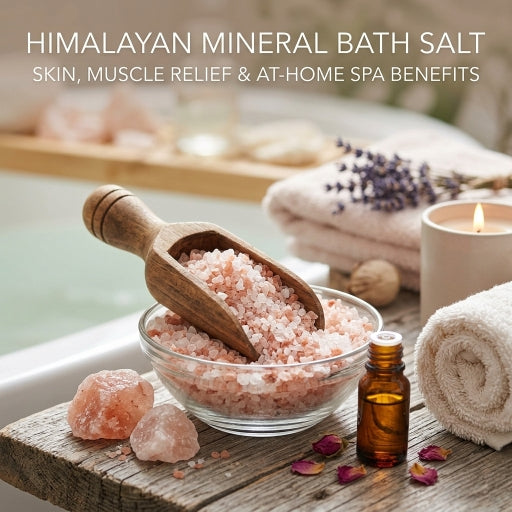
We get asked all the time about the different types of salts we offer here at MassageStore. Today, we are diving deep into 100% Pure & Natural Himalayan Mineral Bath Salt—an unrefined, mineral-dense wellness agent harvested directly from pristine, ancient sea beds. Whether you are a professional massage therapist sourcing the best for your clients or an individual prioritizing home recovery, understanding this unique pink salt will transform your self-care routine.
Quick Summary: What You Need to Know First
-
What It Is: 100% pure, unrefined coarse or fine-grain crystalline salt mined from ancient geological deposits deep within the Himalayan mountains.
-
Key Benefits: Softens and conditions dry skin, helps soothe mild systemic inflammation, relieves minor muscle tension, and acts as a powerful nervous system reset.
-
The Mineral Edge: Packed with up to 84 trace elements, its striking pink color comes from natural iron oxide, working alongside potassium, calcium, and magnesium.
-
How to Use: Highly versatile. Easily integrated into full thermal baths, targeted foot soaks, custom aromatherapy blends, or professional massage stone protocols.
-
Linen & Tub Safe: Pure, uncolored Himalayan salt dissolves completely clean without staining professional linens, massage tables, or acrylic bathtubs.

What Makes Himalayan Salt Different From Other Mineral Bath Salts?
Himalayan mineral bath salt is an unrefined, pristine salt mined from ancient sea beds deep within the Himalayan mountains. Unlike processed table salt or heavy marine salts, it retains 84 trace minerals, offering a gentle, pH-balancing wellness experience focused on relaxation, skin softening, and light muscle recovery.
When looking for a natural recovery medium, the geographical source determines your therapeutic results. Regular table salt is heavily processed and stripped of its beneficial properties. Standard ocean sea salt is predominantly sodium chloride, which can occasionally dry out or sting sensitive skin barriers.
Authentic Himalayan salt is different. Because it was preserved under massive tectonic pressure for millions of years, it is entirely free from modern environmental pollutants and microplastics found in today's oceans.
What's the Difference Between Pink and White Himalayan Salt?
The variation in color comes down to mineral concentration:
-
Pink Himalayan Salt: Contains higher amounts of trace minerals—specifically iron oxide—which gives it its signature rosy hue. This is the preferred choice for visual aesthetics and comprehensive mineral bathing.
-
White Himalayan Salt: Harvested from different layers of the same ancient mines where iron content is minimal. It provides the same basic sodium chloride purity but lacks the distinct mineral complexity and striking visual appeal of the pink crystals.
Is Himalayan Spa Salt Environmentally Friendly?
Yes, authentic Himalayan salt is traditionally hand-mined from the Salt Range in Pakistan using the room-and-pillar method, which preserves the structural integrity of the caverns without explosive blasting. It requires no heavy chemical processing or synthetic additives. However, because it is a non-renewable geological resource, sourcing from high-quality suppliers ensures that the ecological footprint remains controlled and ethical.
The Mineral Breakdown: What’s Inside the Pink Crystals?
Authentic pink Himalayan salt is primarily composed of sodium chloride but owes its therapeutic reputation to a rich matrix of up to 84 trace elements, including iron oxide, potassium, magnesium, and calcium. These elements work synergistically to condition the skin, promote circulation, and encourage cellular balance.
While it is mostly sodium chloride (which serves as a wonderful natural skin softener and fluid balancer), the surrounding matrix of trace minerals is what elevates a simple soak into a restorative spa treatment.
Key Minerals & Dermal Benefits
Himalayan Salt vs. Epsom Salt vs. Dead Sea Salt: The Ultimate Comparison
While Himalayan salt, Epsom salt, and Dead Sea salt all elevate a bath, they target different wellness goals. Himalayan salt excels at skin conditioning and sensory relaxation; Epsom salt (magnesium sulfate) targets intense post-workout muscle fatigue; and Dead Sea salt provides clinical therapy for chronic dermatological conditions like eczema.
Understanding product differentiation keeps you from wasting money on the wrong medium. If you or your clients are recovering from an grueling powerlifting session, Epsom salt is your tool. If you are managing severe, scaling skin patches, Dead Sea salt is unmatched. But if your goal is an all-encompassing, stress-melting, skin-softening ritual, Himalayan salt is the superior, highly stable choice.
Quick Reference Comparison Table
Core Therapeutic Benefits: Muscle Relief, Inflammation, and Skin Conditions
Bathing in Himalayan salt provides gentle relief for minor inflammation, arthritis stiffness, and dry skin conditions. The warm water increases circulation, while the mineral-rich environment softens rough skin patches, soothes mild eczema or psoriasis irritation, and calms an overactive nervous system to improve sleep and reduce daily stress.
1. Stress Relief and Sleep Support
Why does a Himalayan salt bath make you feel so deeply rested? It acts directly on your sympathetic nervous system. When you sink into a warm, mineral-rich bath, your body temperature rises slightly, then drops when you exit. This temperature shift mimics the body's natural pre-sleep sequence. When paired with the calming properties of trace elements, it helps switch off physical anxiety, making it highly effective for stress relief.
2. Muscle Pain, Soreness, and Arthritis Support
While it doesn’t contain the massive, clinical-grade magnesium levels of Dead Sea salt, Himalayan salt still aids significantly in muscle recovery. The warm water combined with the salt increases the buoyancy of your body, reducing the gravitational pressure on aching joints and stiff muscles. This thermal retention increases local blood flow, safely mitigating minor inflammation and providing comfort for chronic conditions like arthritis.
3. Addressing Eczema, Psoriasis, and Skin Conditions
For those dealing with chronic skin issues, Himalayan salt offers a non-irritating alternative to bubble baths or scented products. Its natural antibacterial and anti-inflammatory qualities help soothe superficial redness, calm persistent itching, and gently exfoliate tough plaques without stripping away the skin's mandatory lipid barrier.
4. Is It Good for Hair Care?
Yes, but in moderation. Himalayan salt can be used to create clarifying scalp scrubs that purge product buildup and oil from hair follicles. However, overusing salt on your hair can dry out the hair shaft by drawing out moisture. If you use it for hair or scalp health, always follow up with a rich, hydrating conditioner.

Debunking the Detox Myth: Does Himalayan Salt Really Detoxify Your Body?
Strictly speaking, Himalayan salt baths do not pull toxins through your skin, as the liver and kidneys handle internal detoxification. However, a warm mineral soak stimulates circulation, promotes sweating, relaxes tight muscles, and lowers stress hormones, providing a deeply restorative effect that mimics a true systemic reset.
It is common in the wellness world to hear that salt baths "suck out heavy metals and impurities." Dermal absorption and excretion simply do not work that way. Your skin is a highly protective, semi-impermeable shield, not a one-way vacuum filter.
Why do you feel so incredibly refreshed after a bath, then?
-
Vasodilation: The warm water opens up blood vessels, carrying fresh oxygen and nutrients to tired tissues.
-
Hydrostatic Pressure: The pressure of the water encourages healthy lymphatic flow, assisting your body's natural internal filtration networks.
-
Sweating: The heat induces mild sweating, which clarifies your pores of surface grime and excess sebum.
How to Take the Perfect Himalayan Salt Bath (Step-by-Step Instructions)
To maximize a Himalayan salt bath, dissolve one to two cups of coarse or fine grains in warm water (98°F to 104°F) and soak for 15 to 20 minutes. This balance of time and temperature prevents dehydration while ensuring your skin effectively absorbs the trace minerals.
Follow these 5 clear steps for an optimal soak:
[Fill Tub with Warm Water: 98°F–104°F]
               │
               ▼
[Add 1–2 Cups of Himalayan Salt & Stir]
               │
               ▼
[Soak Mindfully for 15–20 Minutes]
               │
               ▼
[Rinse Lightly with Warm, Fresh Water]
               │
               ▼
[Pat Dry & Immediately Apply Moisturizer]
Common Mistakes to Avoid
-
Using Boiling Hot Water: Water that is too hot will shock your nervous system, dry out your skin, and cause dizziness. Keep it warm, not scalding.
-
Over-Soaking: Staying in the tub past 20 to 25 minutes will over-hydrate your skin cells, causing pruning and eventually stripping away necessary oils.
-
Skipping the Rinse: Always do a quick, fresh-water rinse after a salt bath to remove any leftover dried mineral crust that could cause itching later.
-
Attempting to Reuse the Salt Water: Can you reuse Himalayan salt from a bath? Absolutely not. Once dissolved, the salt is spent, diluted, and contains shed skin cells and oils. Discard it fully after one use.
Troubleshooting, Tools, and Alternatives
-
What Tools Do I Need? A simple measuring cup to gauge your salt, a floating bath thermometer to monitor temperature, and an airtight jar to keep your bulk salt from absorbing bathroom moisture.
-
What if I Don't Have a Bathtub? Don't worry. You can achieve excellent localized results using a dedicated foot basin for a concentrated foot soak, or by mixing fine-grain salt into an exfoliating shower scrub.
Beyond Full Baths: Foot Soaks, DIY Scrubs, and Aromatherapy Blends
Himalayan salt is highly versatile, serving as an excellent base for targeted foot soaks, rejuvenating body scrubs, and custom aromatherapy rituals. Incorporating specific essential oils or using smooth Himalayan salt stones allows therapists and home users to tailor the sensory and physical recovery experience.
1. Targeted Foot Soaks
If you spend your days working on your feet, a foot soak provides immense relief. Add 21 cup of coarse Himalayan salt to a warm basin of water. It reduces localized swelling, softens tough calluses, and prepares the feet for professional massage or filing.
2. DIY Bath Salt and Scrub Recipes
You can easily craft custom spa blends right at home. Fine-grain salt is best for scrubs, while coarse salt is beautiful for bath mixtures.
-
The Mindful Relaxation Blend: Mix 1 cup of Himalayan salt with 5 drops of Lavender essential oil and 3 drops of Roman Chamomile oil.
-
The Muscle Soothing Blend: Mix 1 cup of salt with 4 drops of Eucalyptus oil and 3 drops of Peppermint oil for a cooling, anti-inflammatory effect.
-
The Exfoliating Body Scrub: Combine 21 cup of fine-grain Himalayan salt with 41 cup of light carrier oil (like grapeseed or sweet almond oil) and a couple drops of sweet orange oil. Gently rub onto damp skin in circular motions.
3. Using Himalayan Salt Stones in Massage Therapy
For massage practitioners, integrating solid Himalayan salt stones into your treatment menu is a game-changer. These hand-carved stones can be gently warmed on a specialized heating pad.
-
They hold therapeutic heat just like traditional basalt stones but offer an added benefit: they glide across the skin, providing a smooth, ultra-light mineral exfoliation.
-
The trace minerals interact directly with the massage lubricant, leaving the client’s skin exceptionally soft while warming deep structural muscle layers.

Practical Maintenance: Hot Tubs, Tub Staining, and Safe Storage
Managing pure Himalayan salt requires basic care to avoid plumbing issues and preserve product quality. Because it is completely natural, uncolored, and free of synthetic dyes, it will not stain your tub or linens, but it should never be used in hot tubs due to equipment corrosion risks.
Can You Use Himalayan Salt in a Hot Tub or Jetted Spa?
Important Warning: Do not use Himalayan salt (or any bath salts) in hot tubs or jetted whirlpool tubs. The high concentration of salt will corrode the internal heating elements, degrade rubber seals, clog the filtration systems, and permanently void your equipment's manufacturer warranty. Keep your salt rituals restricted to standard porcelain, acrylic, or copper bathtubs.
Will It Stain My Tub or Linens?
No. Pure, authentic Himalayan salt contains no artificial coloring agents or synthetic dyes. The pink tint is completely structural to the mineral itself. Once dissolved, the water is clear with a faint, natural hue that drains away without leaving residue or staining your professional massage linens.
How to Store Himalayan Salt to Keep It Fresh
Salt is naturally hygroscopic, meaning it actively draws moisture out of the surrounding air. If you leave an open bag of salt in a humid bathroom, it will quickly clump into a solid rock.
-
The Solution: Store your salt in a tightly sealed, airtight glass or heavy plastic container.
-
Location: Keep it in a cool, dry cupboard away from direct sunlight and steam. Stored correctly, Himalayan salt has an indefinite shelf life and will never spoil.
What Does Himalayan Salt Smell Like?
Pure, unadulterated Himalayan mineral salt is entirely odorless. Unlike marine sea salts, which can sometimes carry a faint, fishy ocean scent, Himalayan salt is completely clean. This makes it a perfect, neutral blank canvas for adding your own high-quality therapeutic essential oils.
Is Himalayan Salt Safe for Everyone? (Sensitive Skin and Children)
Pure Himalayan bath salt is exceptional for sensitive skin and safe for children because it contains zero fragrances, synthetic dyes, or harsh chemical additives. It respects the natural skin barrier, though minor precautions should be taken regarding water temperature and soak duration to avoid over-drying.
For Sensitive Skin Types
Because it is 100% natural and free from common chemical irritants like sodium lauryl sulfate (SLS), artificial perfumes, and parabens, it is generally highly tolerated by hypersensitive skin. However, if you have open wounds, severe scratches, or broken skin blisters, salt water will sting. Wait for surface wounds to close before taking a salt bath.
Can Children Use Himalayan Salt Baths?
Yes, children can absolutely benefit from a calming salt bath, especially before bedtime to encourage deep sleep. However, modify the parameters for safety:
-
Reduce the amount of salt to 41 or 21 cup.
-
Ensure the water is lukewarm (around 95°F to 97°F).
-
Limit their soak time to a maximum of 10 minutes to protect their delicate skin from over-drying.
Frequently Asked Questions (FAQs)
What is the ideal time commitment for a salt bath?
A proper Himalayan salt bath takes between 15 to 20 minutes of soaking time. Factoring in preparation and post-bath moisturizing, you should set aside about 30 to 45 minutes for the entire self-care ritual.
How often should I take a Himalayan salt bath?
For general wellness, skin conditioning, and stress management, taking a salt bath 2 to 3 times per week is highly effective. Daily use is unnecessary and can eventually dry out your skin.
What does a professional salt room spa experience feel like?
Also known as halotherapy, entering a salt room feels like stepping into a dry, serene cave. The walls and floors are lined with tons of pure pink salt, and a machine micro-aerosolizes dry salt particles into the air. It feels deeply grounding, quiet, and noticeably clears up your respiratory tracts, making it easier to breathe deeply.
Why is Himalayan salt considered superior to regular sea salt?
Regular sea salt is harvested from modern, open oceans that are unfortunately exposed to industrial waste, oil spills, and microplastics. Himalayan salt was deposited millions of years ago, long before pollution existed, making it arguably the cleanest, purest crystalline salt on Earth.
Can I mix Himalayan salt with Epsom salt?
Yes. If you want the deep muscle-relaxing benefits of magnesium sulfate along with the skin-conditioning trace minerals of pink salt, you can absolutely create a 50/50 blend in your bathwater. They complement each other beautifully.
Can I use Himalayan salt as a facial scrub?
Only if you use an ultra-fine grain variant, and even then, use extreme caution. The skin on your face is highly delicate, and coarse salt crystals can cause microscopic tears. For facial care, it is much safer to dissolve a tiny pinch of salt in warm water and use it as a gentle, clarifying rinse.
How much salt should I add to a full bath versus a foot soak?
For a standard, full-sized bathtub, use 1 to 2 cups of pure Himalayan salt. For a targeted foot soak in a small basin or foot bath, 21 cup of salt is plenty.
Does Himalayan salt dissolve faster in hot or cold water?
Like most crystalline structures, Himalayan salt dissolves significantly faster in hot water. If you are using large, coarse stones or crystals, stir them into a few inches of hot water at the bottom of the tub to dissolve them completely before filling the rest of the bath with cooler water to reach a safe, comfortable temperature.
The Bottom Line
Bringing an ancient, unpolluted wellness ritual into your modern routine doesn't require a complicated strategy or a massive budget. Himalayan Mineral Bath Salt excels at what most of us actually need: effortless relaxation, skin conditioning, and a true physical reset from daily stress. Whether you are a professional therapist preparing a client's targeted foot soak or a home user drawing a tub to wash away a demanding week, these pure pink crystals offer a simple, unrefined, and completely natural win for your recovery toolkit.
See It Here: Best of Nature 100% Pure & Natural Himalayan Mineral Bath Salt