
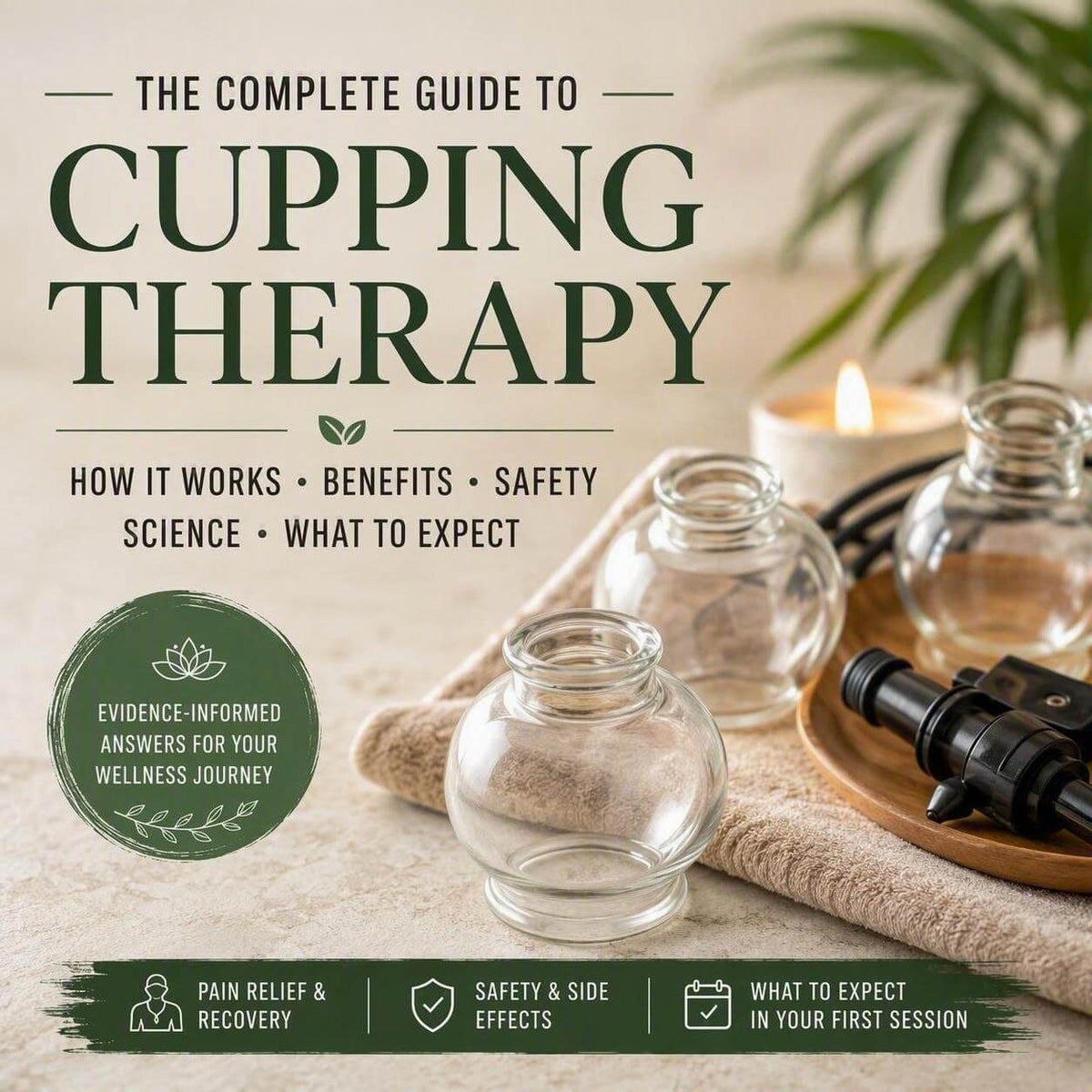
You've probably seen the circular marks on Olympic athletes, heard your massage therapist mention cupping, or wondered whether this centuries-old practice actually works. The truth is that cupping therapy sits at the intersection of traditional healing and modern recovery, making it one of the most talked-about wellness techniques today.
In this guide, we'll separate fact from fiction, explain what science currently says, discuss who may benefit from cupping, explore safety considerations, and answer the questions people ask most before scheduling their first session.
What's Inside This Guide
If you're new to cupping, here's what you'll learn:
- What cupping therapy is and how it works
- The science behind cupping and current research findings
- Dry cupping vs. wet cupping
- Why athletes use cupping
- Whether cupping may help back pain and muscle soreness
- What happens during a typical session
- Potential side effects and safety considerations
- How long cupping marks last
- What to do before and after treatment
- How often you should get cupping
- How much cupping typically costs
- Cupping vs. massage therapy
- Whether at-home cupping is right for you
- Frequently asked questions from real consumers

What Is Cupping Therapy?
Cupping therapy is a technique that uses suction to gently lift the skin and superficial tissues into a specially designed cup. Unlike massage, which primarily relies on compression and pressure, cupping creates a decompression effect that temporarily lifts tissue upward.
The practice has existed for centuries and appears in multiple traditional healing systems across Asia, the Middle East, and other regions. Today, cupping has evolved into a popular wellness and recovery modality used by massage therapists, sports recovery specialists, physical medicine practitioners, and wellness professionals.
The basic process is surprisingly simple:
- A cup is placed on the skin.
- Air is removed from the cup.
- Negative pressure develops inside the cup.
- The skin and tissue are gently drawn upward.
- The cup is removed after a predetermined period.
Depending on the technique being used, cups may remain stationary or be moved across lubricated skin.
Many people describe the sensation as:
- Gentle pulling
- Deep pressure without compression
- Stretching
- Tightness
- Warmth
- A feeling of tissue "lifting"
One of the biggest misconceptions about cupping is that the treatment must be painful to be effective. In reality, skilled practitioners often use surprisingly moderate suction levels while still achieving the desired treatment goals.
How Does Cupping Therapy Actually Work?
Researchers are still studying the exact mechanisms behind cupping therapy, but several potential explanations have emerged. Current theories involve changes in local circulation, tissue mechanics, sensory stimulation, and pain perception pathways.
Think of cupping as creating a controlled vacuum against the skin.
When suction is applied:
- The skin lifts upward
- Superficial tissues are decompressed
- Local circulation patterns may temporarily change
- Sensory nerves may become stimulated
- Mechanical tension within soft tissues may shift
Scientists continue to investigate which of these responses contribute most significantly to the outcomes people experience after treatment. Importantly, proposed mechanisms are not the same thing as proven therapeutic benefits.
This distinction matters.
It is entirely possible for researchers to understand that cupping produces measurable physiological effects while still debating exactly why certain individuals experience reduced discomfort, improved mobility, or increased feelings of recovery.
Does Cupping Therapy Actually Work?
The most honest answer is neither "absolutely" nor "not at all."
Current research suggests cupping may provide benefits for certain pain-related and musculoskeletal conditions, but results vary across studies and conditions. Researchers frequently point to limitations such as differing protocols, inconsistent treatment methods, and varying research quality.
In 2025, a large systematic review examining chronic musculoskeletal pain found that cupping therapy was associated with reductions in pain intensity, although improvements in functional disability and mental health outcomes were less consistent.
The National Center for Complementary and Integrative Health notes that while cupping may help reduce pain in some individuals, there is not yet enough high-quality evidence to make definitive conclusions for many conditions.
The key takeaway?
Cupping appears most promising as a complementary therapy rather than a standalone solution.
Areas Where Research Appears Most Promising
- Low back pain
- Neck pain
- Chronic musculoskeletal discomfort
- Recovery-related soreness
- Certain headache and migraine applications
Areas Where Evidence Remains Limited
- Anxiety disorders
- General wellness claims
- Detoxification claims
- Athletic performance enhancement
- Cosmetic outcomes
The fact that evidence is still developing doesn't mean cupping lacks value. It simply means expectations should be realistic and grounded in what current science can support.

Why Do Athletes Use Cupping Therapy?
Athletes helped bring cupping into the mainstream.
From Olympic swimmers and marathon runners to professional football players and combat athletes, cupping has become a familiar recovery practice in sports environments.
The primary reasons athletes seek cupping include:
- Recovery support
- Muscle soreness management
- Mobility work
- Relaxation
- Soft-tissue maintenance
- Pre-competition preparation
Research involving athletic populations has reported potential improvements in perceived soreness, recovery measures, mobility, and pain-related outcomes, though researchers continue to call for stronger evidence before making broad recommendations.
An important distinction often gets overlooked:
Athletes frequently use techniques because they feel beneficial, not necessarily because they dramatically improve performance metrics.
Recovery, confidence, comfort, and movement quality all matter in high-level sports.
Can Cupping Help Back Pain?
Low back pain remains one of the most extensively studied areas of cupping therapy research.
A 2024 systematic review involving 921 participants found evidence that cupping may provide improvements in pain during certain treatment periods, although long-term effects and overall consistency varied between studies.
Many individuals seek cupping when dealing with:
- Chronic muscular tightness
- Postural discomfort
- Physical workload fatigue
- Exercise-related soreness
- Restricted mobility
Signs You May Want to Discuss Cupping With a Professional
- Persistent muscular tightness
- Repetitive-use discomfort
- Exercise-related soreness
- Reduced range of motion
- Recovery challenges
When Professional Medical Evaluation Should Come First
Seek proper medical care if symptoms involve:
- Sudden weakness
- Severe unexplained pain
- Loss of bowel or bladder control
- Significant trauma
- Progressive numbness
Cupping should never delay appropriate evaluation of serious symptoms.
Dry Cupping vs. Wet Cupping: What's the Difference?
Although both techniques use cups and suction, they are fundamentally different procedures.
| Feature | Dry Cupping | Wet Cupping |
|---|---|---|
| Skin puncture | No | Yes |
| Blood exposure | No | Yes |
| Common in wellness settings | Yes | Less common |
| Infection-control complexity | Lower | Significantly higher |
| Most consumers encounter | Yes | Typically no |
Dry cupping is the version most consumers associate with massage therapy, sports recovery, and wellness services.
Wet cupping involves superficial skin punctures followed by suction. Because blood exposure is involved, the procedure requires substantially greater attention to infection-control practices, equipment handling, practitioner training, and regulatory compliance.
For most consumers and wellness clients, dry cupping is the more relevant discussion.
What Happens During Your First Cupping Appointment?
Most first-time appointments follow a straightforward process designed to assess suitability, deliver treatment safely, and evaluate response.
Step 1: Initial Consultation
Your provider may ask about:
- Medical history
- Current medications
- Treatment goals
- Prior cupping experience
- Recent injuries
- Skin health
Step 2: Assessment
The treatment area is examined for:
- Tissue tension
- Mobility limitations
- Contraindications
- Sensitive structures
Step 3: Cup Selection
Appropriate cup sizes and techniques are chosen.
Step 4: Application
Suction is created and monitored.
Step 5: Removal and Evaluation
The cups are removed and the skin response is assessed.
Many sessions last between 30 and 60 minutes, although treatment length varies by provider and treatment goals.
Is Cupping Painful?
Most people expect cupping to hurt more than it actually does.
The most common sensations include:
- Pulling
- Tightness
- Pressure
- Warmth
- Stretching
Some areas of the body may feel more sensitive than others, but properly applied cupping generally should not produce sharp or intolerable pain.
One of the most common beginner mistakes is assuming stronger suction automatically creates better results.
In reality:
- More pressure isn't necessarily more effective.
- Aggressive suction increases the likelihood of soreness and skin irritation.
- Appropriate pressure typically produces better comfort and compliance.

Red Marks After Cupping: Why They Happen and How Long They Last
The circular marks associated with cupping are the treatment's most recognizable feature.
These marks occur because suction alters local tissue conditions and brings blood and fluid toward superficial layers of the skin, creating temporary discoloration.
The appearance of these marks can vary considerably.
Factors include:
- Suction intensity
- Treatment duration
- Skin characteristics
- Treatment location
- Cup size
- Individual circulation
Marks may appear:
- Light pink
- Red
- Purple
- Brownish
How Long Do Cupping Marks Last?
Most marks begin fading within several days, although more pronounced discoloration can take one to two weeks or longer in some individuals.
Do Dark Marks Mean More Toxins Were Removed?
No.
Scientific evidence does not support the popular claim that darker cupping marks represent toxins leaving the body. Instead, they reflect tissue responses to suction and other local factors.
Darker does not mean better.
Cupping Therapy Side Effects: What Should You Expect?
While many people tolerate cupping well, understanding potential side effects helps set realistic expectations.
Common effects include:
- Temporary discoloration
- Mild soreness
- Tenderness
- Skin sensitivity
- Temporary tightness
Less common complications include:
- Blistering
- Burns
- Persistent discoloration
- Scarring
- Infection
The National Center for Complementary and Integrative Health also notes that rare but serious complications have been reported in the literature.
Proper practitioner training, appropriate equipment, and good client screening help reduce risk.
Is Cupping Safe? Important Contraindications and Precautions
Cupping can be a valuable therapy when applied appropriately, but it is not suitable for every person or every situation.
Areas That May Require Avoidance or Extra Caution
- Open wounds
- Burns
- Active infections
- Fresh surgical sites
- Areas with severe skin irritation
- Significant varicose veins
- Regions with impaired sensation
- Unexplained swelling
Individuals Who Should Consult a Healthcare Professional First
- People taking blood thinners
- Individuals with bleeding disorders
- Those with significant vascular conditions
- People with fragile skin
- Individuals with certain chronic medical conditions
- Pregnant individuals
- Anyone considering wet cupping
Safety always begins before the cups ever touch the skin.
What Should You Do Before and After a Cupping Session?
Simple preparation and aftercare can contribute to a more comfortable experience.
Before Treatment
Consider:
- Staying hydrated
- Eating normally
- Arriving with clean skin
- Reporting medications and health concerns
Avoid:
- Excessive alcohol consumption
- Aggressive exfoliation
- Ignoring medical conditions that may affect treatment
After Treatment
Consider:
- Drinking water
- Getting adequate rest
- Light movement
- Monitoring skin response
Avoid:
- Aggressive scrubbing
- Immediate extreme heat exposure
- Intense self-treatment over treated areas
How Often Should You Get Cupping Therapy?
There is no universal schedule.
Frequency depends on:
- Treatment goals
- Tissue response
- Activity level
- Overall wellness plan
- Practitioner recommendations
Some people schedule occasional wellness sessions, while athletes may incorporate cupping into seasonal recovery strategies.
The best measure isn't frequency.
It's whether treatment produces meaningful and appropriate results for your goals.
How Much Does a Cupping Session Cost?
Pricing varies by:
- Geographic location
- Treatment length
- Provider experience
- Clinic type
- Combined services
Many consumers encounter pricing ranging from approximately $40 to $150+ per session, though specialty treatments and integrated therapy sessions can exceed those ranges.
Questions worth asking include:
- Is cupping included with massage?
- Is pricing based on session time?
- Are assessments billed separately?
- Are package rates available?

Cupping vs. Massage: Which One Should You Choose?
Rather than competitors, massage and cupping often complement one another.
Massage Focuses On
- Compression
- Muscle manipulation
- Relaxation
- Traditional hands-on therapy
Cupping Focuses On
- Decompression
- Negative pressure
- Tissue lifting
- Recovery-oriented applications
Many practitioners successfully combine both approaches within a single treatment plan.
For some individuals, the combination produces a broader treatment experience than either method alone.
Can You Do Cupping at Home?
At-home cupping kits have become increasingly popular, but convenience should never replace safety.
Home users should:
- Read all instructions carefully
- Start conservatively
- Use appropriate suction levels
- Avoid sensitive areas
- Maintain equipment properly
DIY cupping may be appropriate for some users, but it has limitations.
At-home users lack:
- Professional assessment
- Anatomical expertise
- Clinical decision-making
- Customized treatment planning
When in doubt, seek professional guidance first.
How Can You Tell If Cupping Is Working?
Many first-time users focus on visible marks when they should be paying attention to function.
Meaningful indicators may include:
- Improved mobility
- Less perceived tightness
- Better recovery after activity
- Greater comfort during movement
- Reduced soreness
Less meaningful indicators include:
- Darker marks
- Longer-lasting marks
- More aggressive suction
Results should be measured by changes in how you feel and move, not by appearance alone.
Common Cupping Myths Debunked
Myth: Dark Marks Mean More Toxins Were Released
Research does not support this claim.
Myth: More Suction Means Better Results
Excessive suction often increases side effects without improving outcomes.
Myth: Cupping Cures Medical Conditions
Cupping is generally considered a complementary therapy, not a replacement for medical diagnosis or treatment.
Myth: Every Athlete Uses Cupping
While many athletes do use cupping, plenty of successful athletes never incorporate it into their recovery routines.

Coming Up Next: Part 2 — The Complete Guide to Cupping Equipment, Cups, Supplies & Professional Setups
Understanding the therapy itself is only the beginning.
The effectiveness, comfort, and safety of cupping also depend heavily on the equipment being used.
In Part 2, we'll move from theory to practical application and explore the tools that make cupping possible.
We'll Cover:
How Different Types of Cupping Cups Compare
- Silicone cups
- Glass cups
- Plastic vacuum cups
- Bamboo cups
- Modern professional systems
How to Choose the Right Cup Size
Learn which cup sizes work best for:
- Back treatments
- Shoulders
- Legs
- Arms
- Sports recovery applications
Professional vs. Consumer Cupping Sets
We'll compare:
- Beginner kits
- Home-use systems
- Professional-grade sets
- Clinic and spa equipment
Fire Cupping vs. Vacuum Cupping Equipment
Understand:
- Safety differences
- Ease of use
- Learning curves
- Maintenance requirements
Building a Professional Cupping Service
For massage therapists and wellness businesses, we'll discuss:
- Equipment investments
- Startup costs
- Training considerations
- ROI opportunities
- Service integration
Equipment Cleaning and Maintenance
Learn how to:
- Extend equipment life
- Maintain hygiene standards
- Store cups properly
- Avoid common maintenance mistakes
How to Identify High-Quality Cupping Equipment
We'll explain what separates premium equipment from low-quality alternatives and which features truly matter.
By the end of Part 2, you'll understand not only how cupping works, but also how to select the right cups, supplies, accessories, and equipment for your goals.
Frequently Asked Questions (FAQs) About Cupping Therapy
How long does a cupping session usually last?
Most appointments range from 30 to 60 minutes, although treatment times vary based on goals, body areas treated, and whether cupping is combined with massage or other services.
Should I exercise before or after cupping?
Light activity is generally preferred. Many practitioners recommend avoiding intense exercise immediately after treatment, particularly if significant soreness or sensitivity is present.
What areas of the body should not be cupped?
Open wounds, active infections, fresh surgical sites, severe skin irritation, significant varicose veins, and other high-risk areas should be avoided unless specifically evaluated by a qualified professional.
Can cupping help headaches?
Research regarding migraines and certain headache-related outcomes is growing, but evidence is still developing and should not replace appropriate medical evaluation.
Why do athletes have dark circles after cupping?
The circles represent temporary tissue responses to suction. They are not proof of detoxification and do not necessarily indicate treatment effectiveness.
Can people with sensitive skin get cupping?
Possibly. Treatment may need to be modified, suction levels reduced, or certain techniques avoided depending on the individual's skin condition and sensitivity.
Does insurance cover cupping therapy?
Coverage varies considerably by provider, plan, practitioner type, and treatment setting. Many wellness-focused sessions are self-pay.
Is cupping better than massage?
Neither treatment is inherently better. The right choice depends on your goals, preferences, and treatment needs. Many people benefit from combining both approaches.
How many sessions will I need?
Some individuals notice changes after a single treatment, while others pursue a series of sessions. Results and recommendations vary by person.
How do I find a qualified cupping therapist?
Look for practitioners with relevant training, strong hygiene practices, clear communication, proper credentials where required, and a willingness to discuss risks, expectations, and treatment goals.
Final Thoughts
Cupping therapy has endured for generations because many people find it helpful for recovery, wellness, relaxation, and managing everyday muscle tension. Modern research provides encouraging findings for certain conditions while also reminding us that cupping is not a cure-all. The most successful experiences come from realistic expectations, qualified practitioners, appropriate safety practices, and an understanding of where cupping fits within a comprehensive wellness strategy.
See Our Cupping Therapy Supplies
Disclaimer
Cupping therapy is a complementary wellness practice and is not intended to diagnose, treat, cure, or prevent any disease or medical condition. The information provided in this article is for educational purposes only and should not be considered medical advice. Individuals with medical concerns, chronic health conditions, pregnancy, recent surgery, bleeding disorders, or questions regarding suitability should consult an appropriate healthcare professional before receiving cupping therapy.