
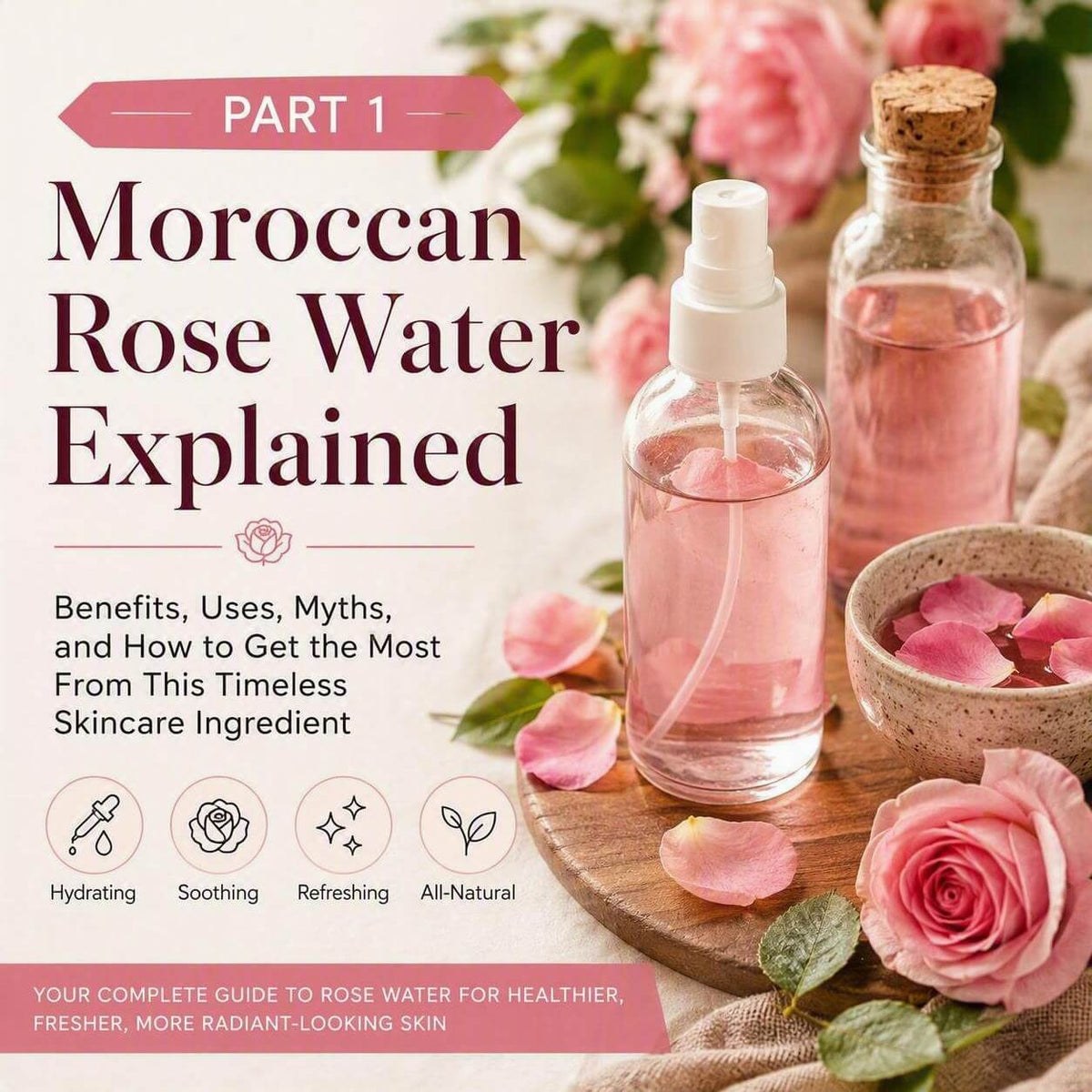
What Is Moroccan Rose Water and Why Has It Been Used for Generations?
Moroccan rose water is a floral water created through the steam distillation of rose petals, most commonly Rosa damascena. It has been treasured for generations because it is simple, versatile, refreshing, and easy to incorporate into skincare, haircare, and self-care routines.
Rose water is one of the oldest beauty ingredients still commonly used today. Unlike complicated skincare formulas with dozens of ingredients, authentic rose water is valued for its simplicity and versatility.
During steam distillation, fresh rose petals are gently processed to create a fragrant floral water known as a hydrosol. The result is a lightweight liquid that can be used throughout the day for hydration, refreshing the skin, and supporting a more comfortable skincare routine.
People commonly use rose water for:
- Facial toning
- Midday skin refreshment
- Hair refreshing
- Makeup preparation
- Post-cleansing hydration
- Self-care rituals
- Body care
- Bath experiences
Its popularity has endured because it adapts easily to nearly every skincare routine and skin type.

Why Rosa Damascena Is Considered the Gold Standard of Rose Waters
Rosa damascena, often called the Damask rose, is one of the most respected rose varieties used in skincare. Its rich aromatic profile and naturally occurring plant compounds have made it a favorite ingredient in beauty and wellness traditions worldwide.
Not all roses are the same.
Although many rose varieties exist, Rosa damascena has become particularly valued because of its distinctive aroma and traditional use in skincare products.
Consumers often seek rose water made from Rosa damascena because it is associated with:
- Rich floral fragrance
- Traditional distillation methods
- Premium-quality rose cultivation
- Multi-purpose skincare applications
- Consistent consumer satisfaction
When selecting a rose water product, the quality of the rose, production process, and overall purity often matter more than marketing claims.
Is Moroccan Rose Water Really Better Than Other Rose Waters?
Moroccan rose water is often highly regarded for its quality and traditions, but the best rose water ultimately depends on purity, production methods, ingredient quality, and authenticity rather than country of origin alone.
Consumers frequently compare:
- Moroccan Rose Water
- Bulgarian Rose Water
- Turkish Rose Water
- Generic Rose Waters
The reality is that exceptional rose water can come from multiple regions. What matters most is whether the product is genuinely distilled from rose petals and free from unnecessary additives.
What to Look for in a High-Quality Rose Water
| Quality Factor | Why It Matters |
|---|---|
| Steam-distilled production | Helps preserve natural plant compounds |
| Simple ingredient profile | Reduces unnecessary ingredients |
| Alcohol-free formula | Generally gentler for skin |
| Authentic rose source | Supports product quality |
| Proper packaging | Helps maintain freshness |
| Clear labeling | Makes informed purchasing easier |
Consumers often discover that a well-made rose water has a subtle, natural scent rather than an overpowering perfume-like fragrance.
What Makes Moroccan Rose Water Smell So Good?
The fragrance of authentic rose water comes naturally from the rose petals used during distillation. The scent is often floral, fresh, slightly sweet, and more nuanced than synthetic rose fragrances.
One of the first things people notice about quality rose water is its aroma.
Many expect rose water to smell exactly like a bouquet of fresh-cut roses. In reality, authentic rose water often has a more delicate scent profile.
Depending on the harvest, growing conditions, and production process, people may describe the aroma as:
- Fresh floral
- Soft and powdery
- Slightly sweet
- Light and airy
- Clean and calming
Why Does Rose Water Sometimes Smell Like Baby Powder?
This question appears surprisingly often.
Natural rose aromas can be interpreted differently by different people. Certain scent notes may register as powdery, creamy, or reminiscent of baby powder.
This variation is typically a characteristic of the natural aroma rather than an indication of poor quality.
Does Rose Water Actually Hydrate Dry Skin?
Rose water can help refresh and lightly hydrate the skin. However, it works best when incorporated into a complete skincare routine that also includes moisturizers and other hydrating products.
One common misconception is that rose water acts as a complete moisturizer.
Rose water can:
- Refresh dehydrated skin
- Add lightweight hydration
- Improve skin comfort
- Prepare skin for additional products
Rose water cannot:
- Replace moisturizers
- Replace facial oils
- Lock moisture into the skin on its own
How to Apply Rose Water for Maximum Hydration
Summary: For best results, apply rose water immediately after cleansing and before heavier products that help retain moisture.
Simple Hydration Routine
- Cleanse the skin.
- Apply rose water to slightly damp skin.
- Apply your preferred serum.
- Follow with moisturizer.
- Use SPF during the daytime.
This layering approach helps support longer-lasting hydration.

Can Rose Water Replace Your Regular Toner?
For many people, rose water can function as a gentle toner. It refreshes the skin after cleansing while providing a more soothing experience than many traditional toners.
Traditional toners often focus on:
- Exfoliation
- Oil control
- Clarification
Rose water toners are typically chosen for:
- Comfort
- Hydration
- Refreshment
- Gentle skin balancing
Many people with sensitive or mature skin appreciate the simplicity of rose water-based toning routines.
Rose Water Toner vs Rose Water Facial Mist
The primary difference is application. Toners are often applied after cleansing, while facial mists are designed for quick and convenient use throughout the day.
| Rose Water Facial Mist | Rose Water Toner |
|---|---|
| Spray application | Applied with hands or cotton pad |
| Convenient throughout the day | Commonly used after cleansing |
| Great over makeup | Primarily skincare focused |
| Travel friendly | Usually part of home routine |
Many modern products can successfully perform both functions.
Is Rose Water Good for Every Skin Type?
Rose water is popular across many skin types because it is lightweight, versatile, and easy to incorporate into existing routines.
Dry Skin
People with dry skin often appreciate:
- Lightweight hydration
- Comfort after cleansing
- Better product layering
Oily Skin
Oily skin types often enjoy:
- Refreshment without heaviness
- Non-greasy hydration
- Quick absorption
Combination Skin
Rose water can help provide hydration without making oilier areas feel overloaded.
Mature Skin
Rose water layers easily with:
- Peptides
- Vitamin C
- Hyaluronic acid
- Ceramide-rich moisturizers
Sensitive Skin
Many users prefer rose water because it tends to be simpler than heavily fragranced or alcohol-based products.
How to Tell If Your Rose Water Is Authentic and Pure
Authentic rose water typically has a straightforward ingredient profile, a natural floral scent, and a transparent production process.
Signs of Authentic Rose Water
✅ Clearly identifies rose water as the primary ingredient
✅ Minimal ingredient list
✅ Naturally floral aroma
✅ Alcohol-free formulation
✅ Transparent labeling
Potential Red Flags
❌ Strong artificial perfume scent
❌ Excessive coloring
❌ Complicated ingredient lists marketed as "pure rose water"
❌ Vague sourcing information

Frequently Asked Questions (FAQs) About Moroccan Rose Water
Can You Use Moroccan Rose Water Every Day?
Yes. Many people use rose water once or multiple times daily as part of their skincare routine.
How Often Should You Apply Rose Water?
Common usage includes:
- Morning
- Evening
- Before moisturizer
- Midday refreshment
What Is the Best Time of Day to Use Rose Water?
Morning and evening are most common, but it can be used whenever skin feels dry, warm, or in need of refreshment.
Can You Sleep With Rose Water On Your Face?
Yes. Many people use rose water as part of their nighttime skincare routine before moisturizer.
How Long Does a Bottle of Rose Water Last?
The answer depends on bottle size and frequency of use. Daily facial, body, and hair applications will naturally use more product than occasional use.
Learn More About It Here: Best of Nature Rose Water Facial Mist - Hydrating Toner
Disclaimer
The information provided in this article is for educational and informational purposes only. It is not intended as medical advice, clinical advice, dermatological advice, diagnosis, treatment, or prevention of any disease or skin condition.
Individual skin types, sensitivities, allergies, and health conditions vary, and products may affect people differently. Always perform a patch test before introducing a new skincare product into your routine. If you have sensitive skin, eczema, rosacea, severe acne, allergies, or any other medical condition, consult a qualified healthcare professional or licensed dermatologist before use.
Any benefits discussed are general observations associated with rose water and skincare practices and should not be interpreted as guaranteed results. This article is intended as a general guideline to help you conduct your own research, evaluate your options, and make informed decisions based on your individual needs and circumstances. Always use products as directed and discontinue use if irritation occurs.